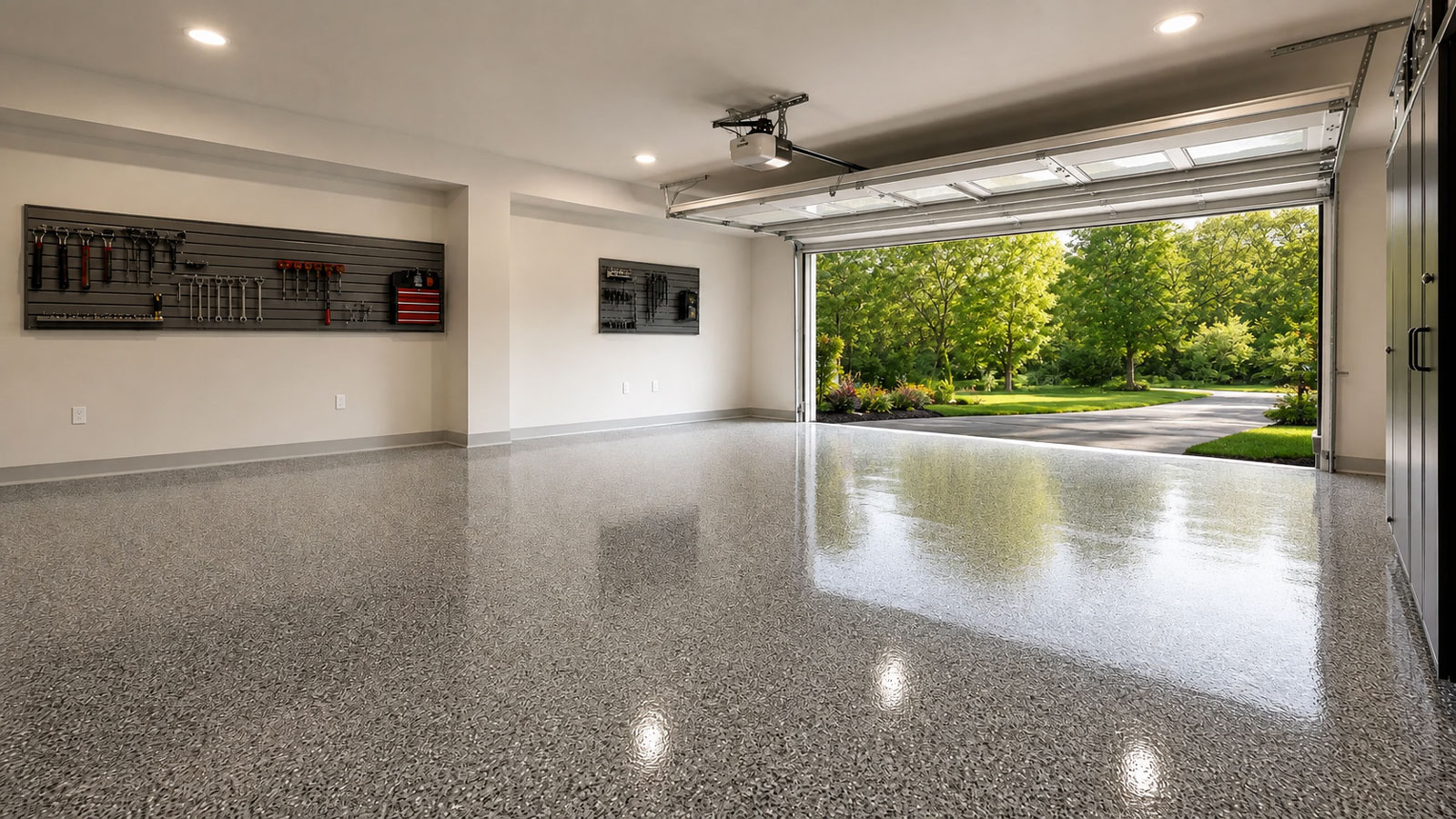
FLOOR COATING GUIDE
Epoxy vs. Polyaspartic: Which Is Right for Your Garage?
Compare the two most common professional garage floor coating systems for durability, cure time, appearance, cost, and long-term value in Oviedo and the Orlando metro area.
Side-by-Side Comparison
Epoxy vs. Polyaspartic at a Glance
| Category | Epoxy | Polyaspartic |
|---|---|---|
| Cure Time | Usually needs more time before light use; full cure can take several days. | Cures quickly; the return-to-use timing should follow the installed system's guidance. Advantage |
| UV Resistance | Can yellow or chalk with prolonged UV exposure, especially in sunlit garages. | Better UV resistance and less likely to yellow over time. Advantage |
| Installation Conditions | More sensitive to temperature, humidity, and moisture vapor during installation. | Can often be installed in a wider range of conditions, subject to the product and slab evaluation. Advantage |
| Durability | Durable under normal residential use, especially with proper surface preparation. | Durable and flexible, with strong resistance to chipping and abrasion. Advantage |
| Chemical Resistance | Good resistance to many household chemicals, oil, and common garage spills. | Strong chemical resistance and protection against automotive fluids. Advantage |
| Cost | Usually the more affordable professional coating system. Advantage | Usually costs more upfront, but may offer stronger long-term value. |
| Finish Options | Can be paired with decorative flake, solid color, or specialty finishes. Tie | Often used with decorative flake finishes and as a durable clear topcoat. Tie |
| Best Fit | Good fit for budget-conscious garage projects where slower cure time is acceptable. Tie | Good fit for homeowners who want faster return to use, UV resistance, and long-term durability. Tie |
Epoxy
Usually needs more time before light use; full cure can take several days.
Polyaspartic
Cures quickly; the return-to-use timing should follow the installed system's guidance.
AdvantageEpoxy
Can yellow or chalk with prolonged UV exposure, especially in sunlit garages.
Polyaspartic
Better UV resistance and less likely to yellow over time.
AdvantageEpoxy
More sensitive to temperature, humidity, and moisture vapor during installation.
Polyaspartic
Can often be installed in a wider range of conditions, subject to the product and slab evaluation.
AdvantageEpoxy
Durable under normal residential use, especially with proper surface preparation.
Polyaspartic
Durable and flexible, with strong resistance to chipping and abrasion.
AdvantageEpoxy
Good resistance to many household chemicals, oil, and common garage spills.
Polyaspartic
Strong chemical resistance and protection against automotive fluids.
AdvantageEpoxy
Usually the more affordable professional coating system.
AdvantagePolyaspartic
Usually costs more upfront, but may offer stronger long-term value.
Epoxy
Can be paired with decorative flake, solid color, or specialty finishes.
TiePolyaspartic
Often used with decorative flake finishes and as a durable clear topcoat.
TieEpoxy
Good fit for budget-conscious garage projects where slower cure time is acceptable.
TiePolyaspartic
Good fit for homeowners who want faster return to use, UV resistance, and long-term durability.
TieLocal Context
What Oviedo Homeowners Should Know
Central Florida humidity, heavy summer rain, heat, and UV exposure can affect how a garage coating should be selected and maintained.
Humidity and Moisture
Oviedo and Orlando summers are humid and the wet season brings regular heavy rain. Concrete condition, moisture, and proper surface preparation all affect how well a coating bonds. A slab should be evaluated for actual moisture concerns before a system is chosen.
Heat and UV Exposure
Central Florida garage doors can expose the floor to intense sun and hot-tire traffic. Epoxy can yellow with prolonged UV exposure, while polyaspartic topcoats generally offer better UV resistance and color stability in sunlit garages.
Wet-Season Tracking
Rain, soil, leaves, and debris can be tracked into active garages during the wet season. A textured decorative flake finish and the right topcoat can support easier cleaning, but surface preparation remains the foundation of any system.
Seasonal Timing
Hot, humid conditions can affect coating application and cure. Polyaspartic systems may be more flexible across conditions, while epoxy can be more sensitive to temperature and moisture during application. The installed system should follow its product-specific requirements.
The Bottom Line
Choose the System That Fits the Concrete and Garage Use
For garages with direct sun, quick return-to-use needs, and long-term UV stability goals, polyaspartic can be a strong option. Epoxy can remain a practical choice for many interior garage conditions and budget-conscious projects.
The right option depends on your concrete, prep needs, exposure, and priorities rather than a one-size-fits-all rule.