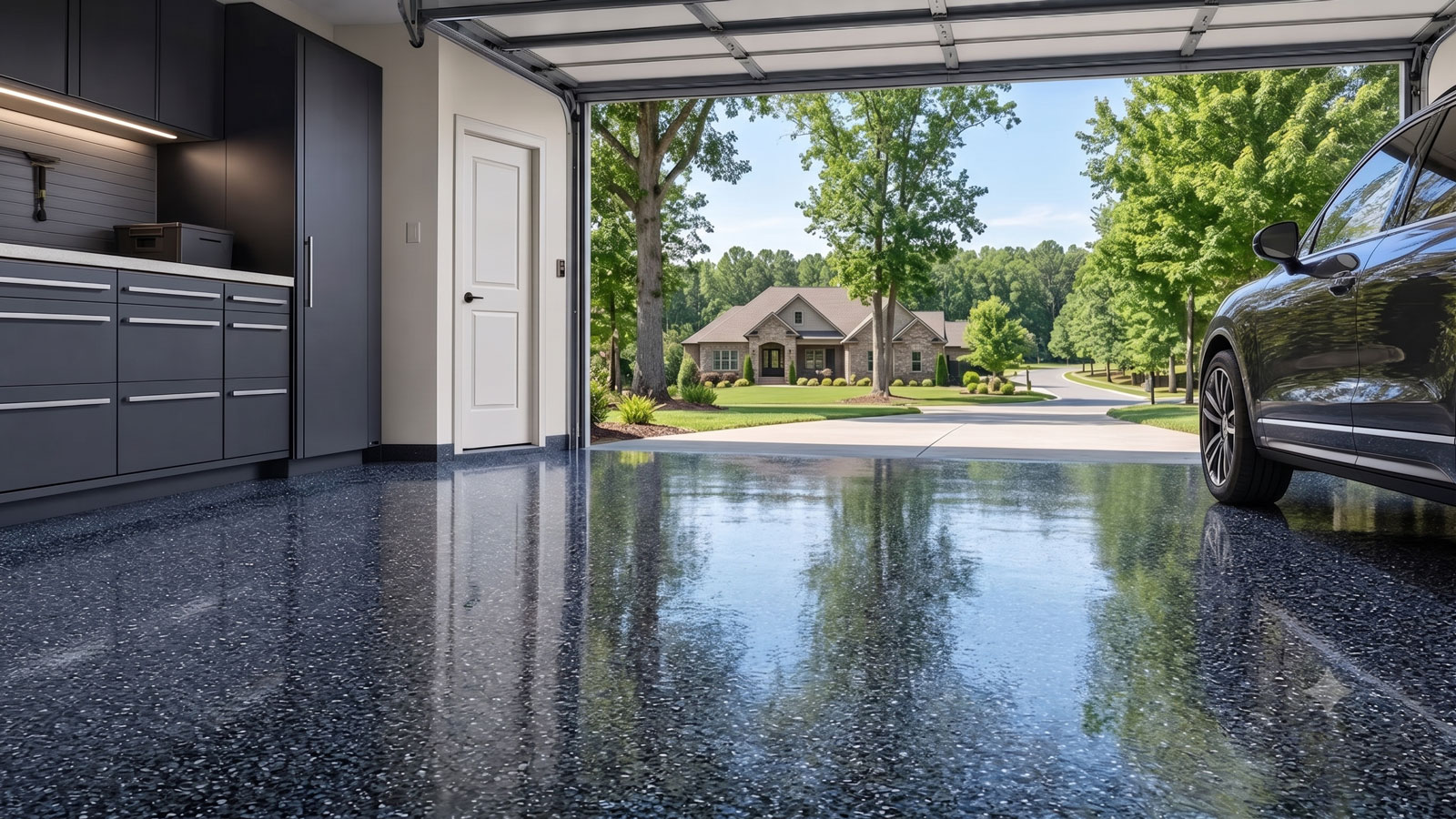
Garage Floor Coating in Lake Mary, FL
Floor Coating Services in Lake Mary, FL
Lake Mary's official history describes a community incorporated on August 7, 1973, after an earlier agricultural and railroad-linked settlement era. The city reports especially strong residential growth in the late 1980s and early 1990s, together with new office, retail, and industrial development. That dated growth pattern matters for garage-floor evaluations: two properties can have different construction generations and a garage may have been rebuilt or resurfaced later than the house.
Lake Mary's Public Works Department oversees stormwater maintenance and development along with streets, parking, and sidewalks; the municipality also publishes specific flood-facts guidance. Its city guidance discusses floodplain permits and flood protection, which should not be mistaken for a finding that a particular garage needs a moisture barrier. Look for observed threshold runoff, visible prior coating failures, and the actual condition of the surface to decide what work belongs in the estimate.
Whether a garage is part of the city's older residential fabric or a later subdivision, surface preparation matters more than housing-market labels. A contractor should identify old floor paint, cracking, stains, hard machine-troweled finishes, and past repairs. Direct summer sun at the opening, hot-tire parking, storage, and cure-time restrictions may affect the specified coating system and the time vehicles must remain outside.
Local Market Insight
Lake Mary incorporated in 1973 and documents major residential growth in the late 1980s and early 1990s. City Public Works also maintains stormwater infrastructure. Together these facts support questions about building-era variation and threshold runoff, while the floor's actual condition decides preparation.
What Affects the Cost of Garage Floor Coating in Lake Mary?
Lake Mary's official history says the city incorporated August 7, 1973 and experienced strong residential development in the late 1980s and early 1990s. Garage slab histories can therefore differ markedly between earlier properties, homes from that growth period and spaces altered later; house age is only a starting clue.
City Public Works maintains stormwater as well as roadways, parking and sidewalks, and the municipality publishes flood-facts guidance. Such infrastructure context should prompt a private threshold inspection, not an automatic assumption that concrete contains excess moisture.
Public pricing is $6-$12 per sq. ft.; a typical two-car garage is commonly $3,000-$5,500. The actual estimate depends on square footage, concrete condition, preparation, coating system, and finish choices.
- 1973 incorporation and building generations: Lake Mary began long before incorporation in 1973 and developed rapidly in later decades. Ask if the actual garage floor is original, resurfaced, painted or repoured before estimating removal and repair.
- Late-1980s and early-1990s housing growth: The city's history documents a residential growth surge during these years. That date range can guide questions about builder coatings and past repairs but cannot replace direct slab evaluation.
- City floodplain and stormwater guidance: Lake Mary maintains stormwater facilities and publishes flood facts. An estimate must still investigate repeated water crossing a private apron separately from ordinary wet tires.
- Existing paint and dense finishes: Floor coatings need a sound mechanically profiled substrate. Old floor paint, penetrating sealer, smooth machine-troweled surfaces and unknown repairs can alter the grinding and removal scope.
- Garage edges and movement joints: Discuss stem walls, storage units, step transitions, cracks and control joints before signing. A properly repaired stable crack is not equivalent to a joint that must accommodate movement.
- UV exposure, finish and scheduling: Doorway sun, rain tracked indoors, hot-tire parking, and household access affect the specified topcoat and texture. Confirm manufacturer cure conditions and vehicle-return time.
Call for a clear, project-specific estimate — or request one online.
Lake Mary's 1970s Incorporation and 1990s Garage Construction
The City of Lake Mary's history traces settlement to nineteenth-century agricultural and railroad communities and gives an exact incorporation date of August 7, 1973. It also identifies substantial residential and commercial growth in the late 1980s and early 1990s. Those are verifiable development milestones that help explain why garage concrete across the city may have different origins.
That timeline is not an automatic age label for a slab. A house built during a growth wave may have a floor painted later, patched after plumbing work, or replaced independently of the structure. An older house can also have a relatively new garage slab. A reliable coating estimate starts with what exists now, not with a broad subdivision chronology.
Ask the contractor to identify previous paint or sealer, patch compounds, cracks, control joints, and areas exposed to oil or workshop chemicals. Those features influence which material must be removed and how the sound concrete will be profiled. A polished or clean-looking finish can still require mechanical preparation.
Two similar Lake Mary garages may thus need very different amounts of grinding, repairs, edge work, and cure-time coordination. A written proposal should name the coating layers, perimeter treatment, and contingency for weak material uncovered during preparation rather than treating the same square footage as equal work.
Lake Mary Flood Facts, Garage Entrances, and Coating Claims
Lake Mary's Public Works department is responsible for stormwater infrastructure in addition to streets, parking and sidewalks. The city's published flood-facts guidance discusses floodplain development requirements and protective measures. These municipal responsibilities are concrete local context, but they do not determine moisture emissions or existing coating adhesion at a private home.
First distinguish exterior runoff from tracked-in rain. Observe whether driveway water crosses the garage-door line, whether a puddle appears only after parking a wet vehicle, and whether concrete shows persistent damp or mineral residue after other surfaces dry. Different observations may require grading, drainage, or slab evaluation instead of a coating change.
Ask about sunshine at the threshold and the garage's actual use. A household storing tools and bikes may value traction and easy sweeping differently from one using the floor primarily for vehicle parking. The topcoat should be suitable for the specified UV exposure, and material application limits should match the installation weather.
When comparing Lake Mary bids, keep flood-mitigation claims separate from the resin system. Confirm grinding, repairs, control-joint treatment, flake or texture choices, and documented times before pedestrians and cars can return. A coating improves a prepared finish; it is not a stand-in for floodproofing an improperly draining property.
Frequently Asked Questions
What does Lake Mary's 1973 incorporation date say about my garage slab?
It is a city-history milestone, not a date for your concrete. Lake Mary grew substantially in the late 1980s and early 1990s, and garages can have later repairs, paint and repours. Inspect the actual floor first.
Does the city flood-facts page mean my garage needs a moisture barrier?
No. Lake Mary's public flood guidance and stormwater responsibilities provide regional safety context. Evaluate any recurring threshold flow, wet areas, or old coating failures at your specific property before proposing remediation.
What preparation differs for a painted Lake Mary garage?
Old paint may need to be removed and concrete correctly profiled. The contractor should identify whether the existing finish is compatible and sound rather than simply covering it with another resin layer.
How much do cracks and joints change a quote?
They can change the repair scope and timeline. Stable chips or cracks may be treated before coating, while movement joints require handling that preserves their function; the estimate should distinguish them.
Is faster cure the main reason to choose polyaspartic?
Not alone. Compare full system materials, prep requirements, UV exposure at the door, desired surface texture, actual cure conditions, and when the household needs vehicles back.
Lake Mary Neighborhoods & Local Context
Phone Quote Line
Talk through your garage, coating options, and project-specific pricing.
(689) 399-4111Typical Project Cost
$3,000-$5,500
Typical two-car garage range. Final pricing depends on floor size, concrete condition, prep work, coating type, and finish options.
Helpful Guides